what are you looking for?
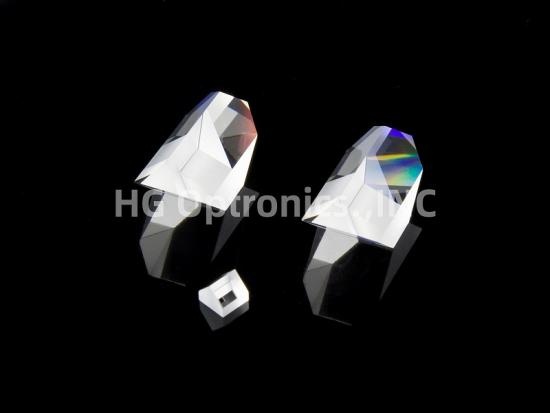
Prisms are transparent optical devices which refract or reflect light. They have manifold applications in laser technology.
Product Origin:
ChinaShipping Port:
Fuzhou, ChinaLead Time:
5-6weeks


2.1 What is the Laser Prisms?
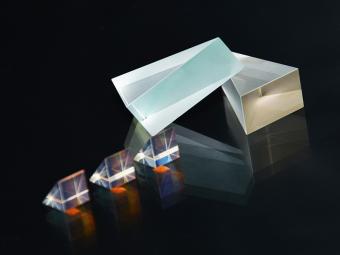
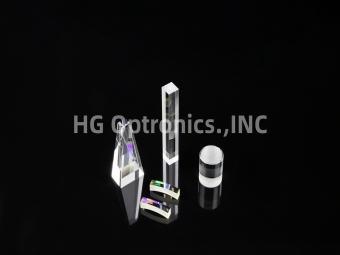
Laser Prismsare used to redirect laser beams in a number of beam steering or beam manipulation applications. Laser Prisms use a variety of substrates, coatings, or a combination of the two to achieve high reflectivity of a particular range of wavelengths. Laser Prisms are designed to internally reflect a laser beam off of multiple surfaces in order to redirect the beam path. Laser Prisms come in several types including anamorphic, right angle, or retroreflector varieties designed for different kinds of beam deviation.
2.2. Key Features:
High Precision Processing
Excellent Film Performance
High Damage Threshold
Excellent Environment Stability
2.3. High Specifications
|
Material: |
BK7 or Fused Silica(Or Custom Design) |
|
Dimension: |
4mm-120mm(Right Angle Side) |
|
Surface Flatness |
Lambda/8@632.8nm |
|
Angle Tolerance: |
+/-5″ |
|
Surface Quality: |
10-5 |
|
Bevel: |
0.25mm*45 degree. |
 Leave A Message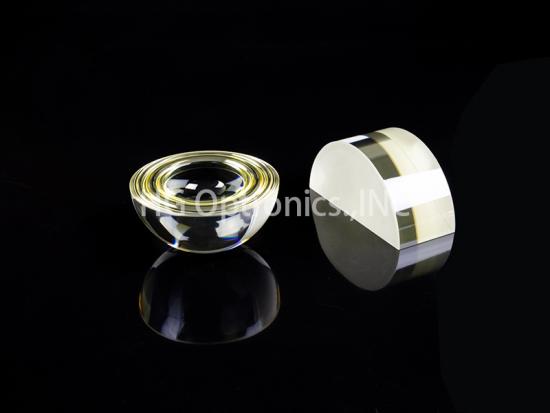
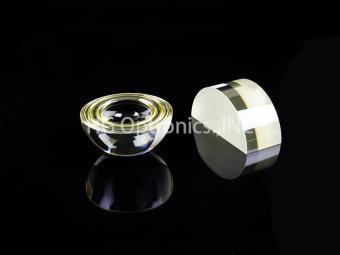
C-lens are specifically designed for fiber optics applications such as collimator, isolator, switch, collimator array and laser assembly. Compare to other gradient index lens, C-lens have several advantages including low cost, low insertion loss in long working distance, and wide working distance range. With our experienced optical design engineers, HG OPTRONICS can also provide custom designed C-lens per customer's requirement.
Read More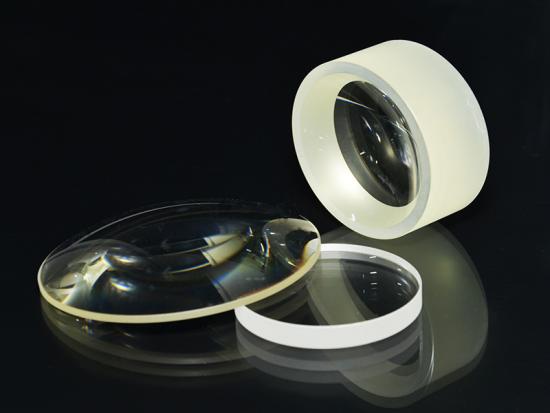
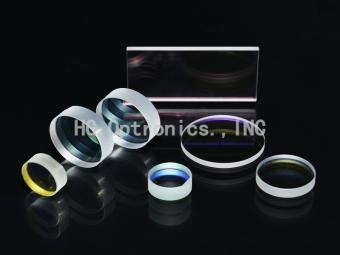
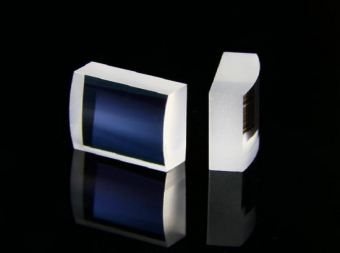
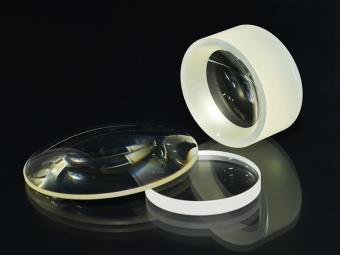
Laser Lenses are used to focus collimated light from laser beams in a variety of laser applications. Laser Lenses include a range of lens types including HGQ Lenses, Cylinder Lenses, or Laser Generator Lenses. Laser Lenseare designed to focus light in several different ways depending on the lens type, such as focusing down to a point,a line, or a ring. Many different lens types are available in a range of wavelengths.
Read More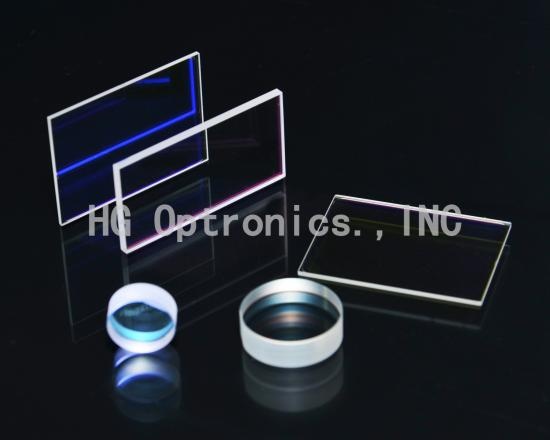
Laser Protect Windows(Laser protective glass, protective filters or welding protective windows) are used to save for the high cost of laser optics.
Read More
Laser mirrors are fabricated with specialized coatings, which will offer high damage thresholds.
Read More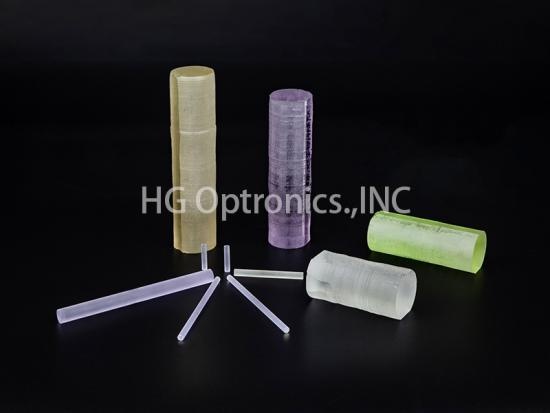
HGO grows Pr:YLF laser crystals using Czochralski technology. Pr3+:YLF has been found as promising laser material for producing visible lasers directly and UV lasers through intracavity second-harmonic generation. Very few laser materials have the necessary properties for the realization of lasing in the visible spectral range. Trivalent praseodymium (Pr3+) is known to be an interesting laser ion for use with solid-state lasers in the visible spectral range because of its energy levels scheme, providing several transitions in the red (640 nm, 3P0 to 3F2), orange (607 nm, 3P0 to 3H6), green (523 nm, 3P0 to 3H5), and dark red (720 nm, 3P0 3F3+3F4) spectral regions.
Read More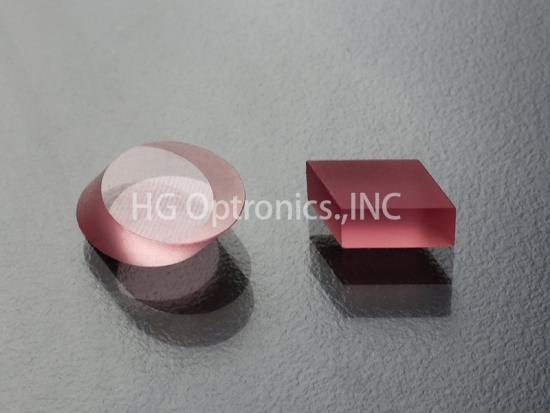
Ti:Sapphire crystal is the most widely used tunable solid-state laser material combining the supreme physical and optical properties with the extremely broad lasing range. Its lasing bandwidth can support pulses < 10fs making it the crystal of choice for femtosecond mode-locked oscillators and amplifiers. The absorption band of Ti:Sapphire centers at ~ 490 nm so it may be conveniently pumped by various laser sources such as argon ion lasers or frequency doubled Nd:YAG, Nd:YLF, Nd:YVO4 lasers at ~530nm. Laser designers are using Ti:sapphire to generate femtosecond pulses to create new industrial tools. A properly delivered femtosecond laser pulse interacts within the target leaving the surrounding area undisturbed. Newly developed femtosecond pulsed lasers micro-machine complex fine structures in glass, metal and other materials. Active waveguides can be written below the surface, integrating optical devices within the body of a substrate. Defects in photomasks can be repaired without disturbing neighbouring patterns. And it is now possible to achieve cellular resolution in vivo for medical diagnosis with femtosecond pulse lasers.
Read More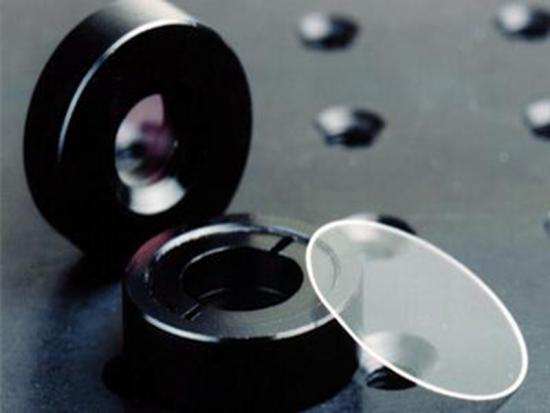
Waveplates (retardation plates or phase shifters) are made from materials which exhibit birefringence. The velocities of the extraordinary and ordinary rays through the birefringent material varies inversely with their refractive indices. This difference in velocities gives rise to a phase difference when the two beams recombine.
Read More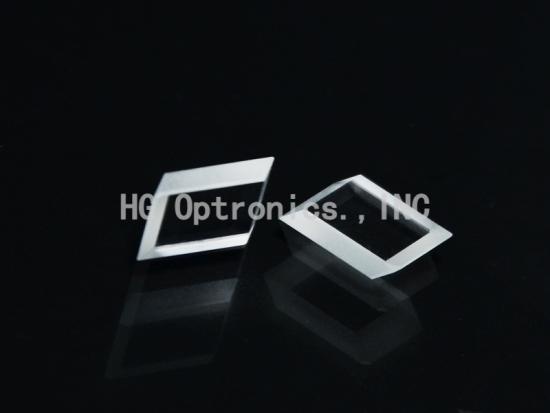
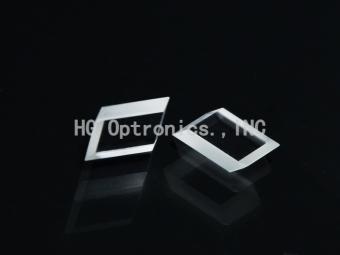
The Rhomboid prism application for rhomboid-prism is controlling and redirecting the optical path without affecting the image direction. They can be used to displace an optical center line for light beam folding and stereoscopic systems of different sizes.
Read More
 IPv6 network supported