what are you looking for?
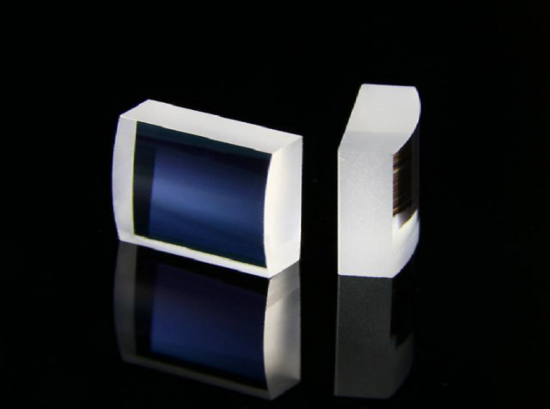
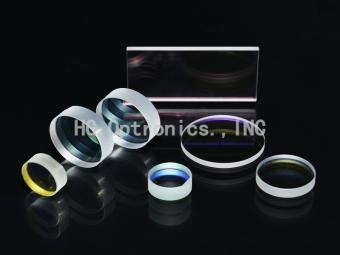
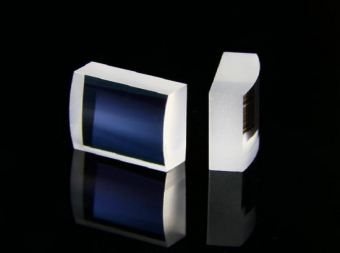
Plano-convex rectangular cylindrical lenses are useful for line imaging or uni-axial magnification in a wide range of applications. These lenses may be combined with other lenses to form complex imaging systems.
Product Origin:
ChinaShipping Port:
Fuzhou, ChinaLead Time:
5-6weeks


4.1. Why are Plano-conves Retangular Cylindrical lenses used?
Plano-convex rectangular cylindrical lenses are available with positive or negative focal lengths, ideal for laser line generation or anamorphic beam shaping uni-axial magnification in a wide range of applications to circularize laser outputs.These lenses may be combined with other lenses to form complex imaging systems.
4.2. Specifications:
|
Material: |
Optical glass, Fused silica |
|
Design wavelength: |
546.1nm |
|
Diameter tolerance: |
+0/-0.05mm |
|
Focal tolerance: |
+/-2% |
|
surface quality : |
40-20 S/D |
|
Centration: |
3 arcmin |
|
Surface flatness: |
N=5△N=0.5 |
|
Clear aperture: |
90% |
|
Bevel: |
Protective |
|
Coating |
Optional |
 Leave A Message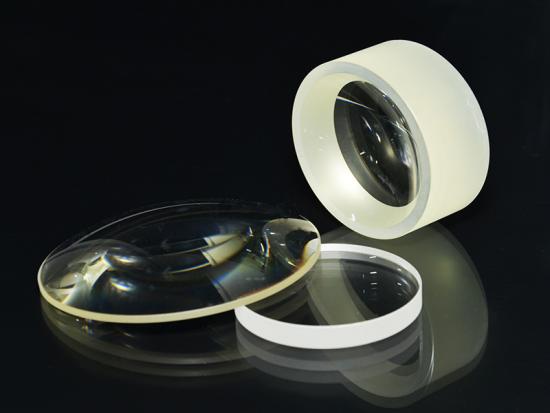
A cylindrical lens is a lens that focuses light on a line instead of a point, like a spherical lens. The curved face or faces of a cylindrical lens are sections of a cylinder, and focus the image passing through it into a line parallel to the intersection of the surface of the lens and a plane tangent to it. The lens compresses the image in the direction perpendicular to this line and leaves it unaltered in the direction parallel to it (in the tangent plane). In a light sheet microscope, a cylindrical lens is placed in front of the illumination objective to create the light sheet used for imaging. Cylindrical lenses focus or expand light in one axis only. They can be used to focus light into a thin line in optical metrology, laser scanning, spectroscopic, laser diode, acousto-optic, and optical processor applications. They can also be used to expand the output of a laser diode into a symmetrical beam. Cylindrical lenses are widely used in telecom applications like WSS, 40G/100G modules and laser applications like pump laser modules
Read More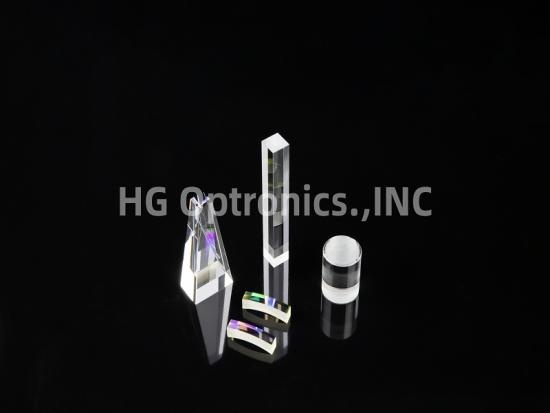
Plano-concave rectangular cylindrical lenses provide uni- axial negative imaging for anamorphic beam expansion and a wide range of applications.These lenses may also be used as mirror blanks if a concave cylindrical surface mirror is required.
Read More
Plano-convex circular cylindrical lenses are useful for line imaging or uni-axial magnification in a wide range of applications. These lenses may be combined with other lenses to form complex imaging systems.
Read More
Plano-concave rectangular cylindrical lenses provide uni- axial negative imaging for anamorphic beam expansion and a wide range of applications.These lenses may also be used as mirror blanks if a concave cylindrical surface mirror is required.
Read More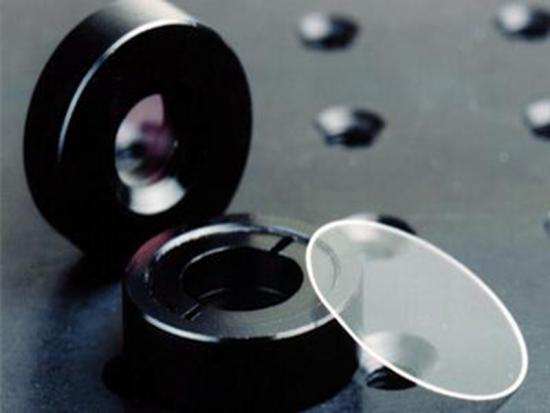
Waveplates (retardation plates or phase shifters) are made from materials which exhibit birefringence. The velocities of the extraordinary and ordinary rays through the birefringent material varies inversely with their refractive indices. This difference in velocities gives rise to a phase difference when the two beams recombine.
Read More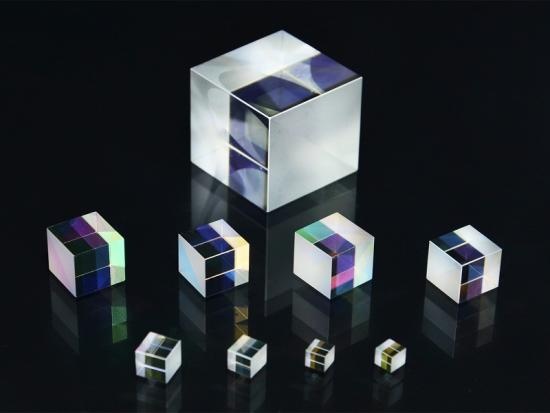
Beamsplitter Cubes are constructed by cemented two right angle prisms. The hypotenuse of one prism is coated with polarization dielectric coating.
Read More
Rod Lenses are used for fiber coupling and laser diode beam shaping, lenses with a 0mm working distance are ideal for collimation of single and multi-mode optical fibers and laser diodes because the lens can be positioned and glued directly to the emission source. For focusing applications, or in instances where the lens can’t be in direct contact with the emission source, all lenses are available with a small working distance as well. HG OPTRONICS can provide the size from Φ1~Φ15mm, quantity price and custom sizes, including variations in polished/ground surfaces, are available to customers upon request.
Read More
Plano-convex circular cylindrical lenses are useful for line imaging or uni-axial magnification in a wide range of applications. These lenses may be combined with other lenses to form complex imaging systems.
Read More
 IPv6 network supported