what are you looking for?
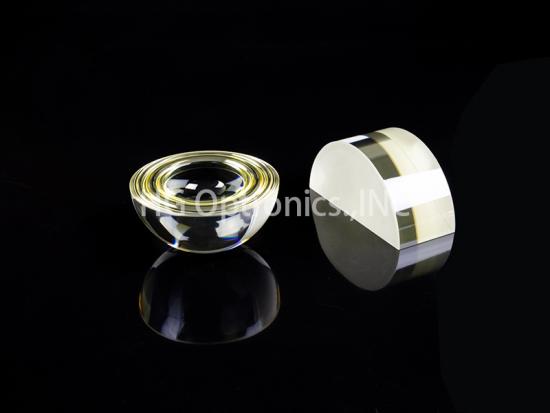

C-lens are specifically designed for fiber optics applications such as collimator, isolator, switch, collimator array and laser assembly. Compare to other gradient index lens, C-lens have several advantages including low cost, low insertion loss in long working distance, and wide working distance range. With our experienced optical design engineers, HG OPTRONICS can also provide custom designed C-lens per customer's requirement.
Product Origin:
ChinaShipping Port:
Fuzhou, ChinaLead Time:
4 weeks


1.1. Application
Collimator
Isolator
Switch
MEMS
Collimator Array
Laser Assembly
1.2. Specifications:
|
Diameter Tolerance: |
+0.005mm,-0.015mm |
|
Diameter Range: |
>f1.0mm |
|
Length Tolerance: |
±0.03mm |
|
Curve Radius Tolerance: |
±0.01mm |
|
Wedge Tolerance: |
±0.3° |
|
Surface Quality: |
40-20 scratch & dig |
|
Coating: |
R<0.25%@(Design Wavelength)±40nm |
 Leave A Message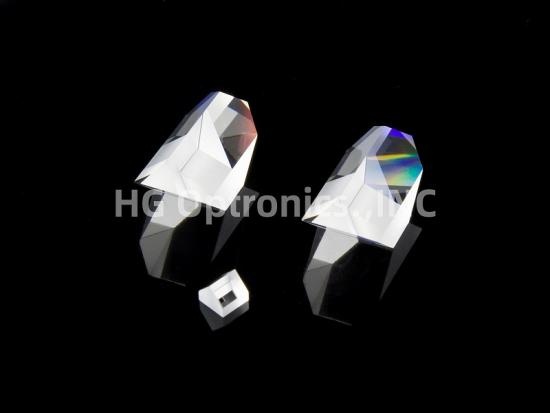
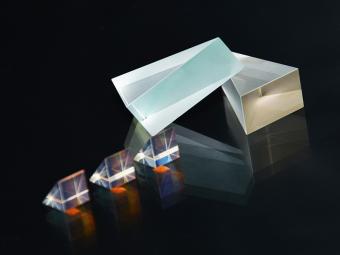
Prisms are transparent optical devices which refract or reflect light. They have manifold applications in laser technology.
Read More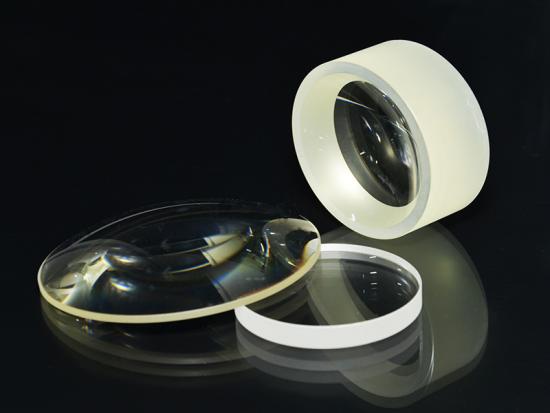
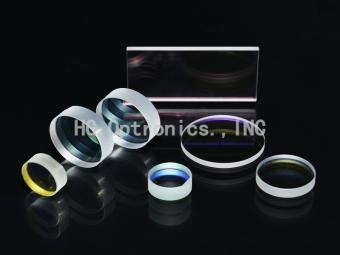
Laser Lenses are used to focus collimated light from laser beams in a variety of laser applications. Laser Lenses include a range of lens types including HGQ Lenses, Cylinder Lenses, or Laser Generator Lenses. Laser Lenseare designed to focus light in several different ways depending on the lens type, such as focusing down to a point,a line, or a ring. Many different lens types are available in a range of wavelengths.
Read More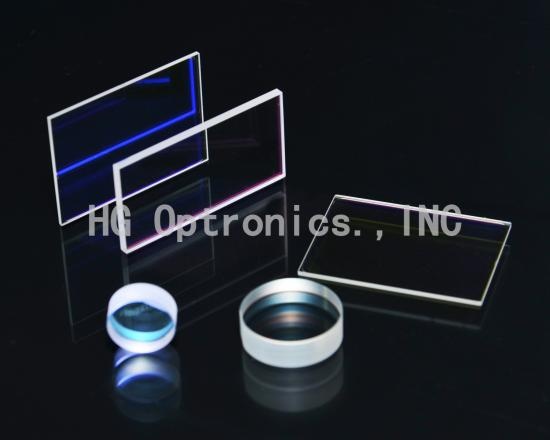
Laser Protect Windows(Laser protective glass, protective filters or welding protective windows) are used to save for the high cost of laser optics.
Read More
Laser mirrors are fabricated with specialized coatings, which will offer high damage thresholds.
Read More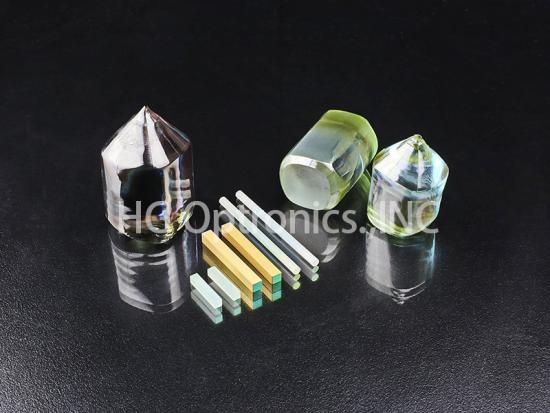
Nd:YVO4 (Neodymium Doped Yttrium Orthovanadate) crystals is one of the most promising commercially available diode pumped solid state laser materials, especially, for low to middle power density. This is mainly for its higher absorption and emission features than Nd:YAG crystal. Pumped by laser diodes, Nd:YVO4 crystal has been incorporated with high NLO coefficient crystals ( LBO, BBO, or KTP) to frequency-shift the output from the near infrared to green, blue, or even UV. This incorporation to construct all solid state lasers is an ideal laser tool that can cover the most widespread applications of lasers, including machining, material processing, spectroscopy, wafer inspection, light displays, medical diagnostics, laser printing, and data storage, etc. It has been shown that Nd:YVO4 based diode pumped solid state lasers are rapidly occupying the markets traditionally dominated by water-cooled ion lasers and lamp-pumped lasers, especially when compact design and single-longitudinal-mode outputs are required.
Read More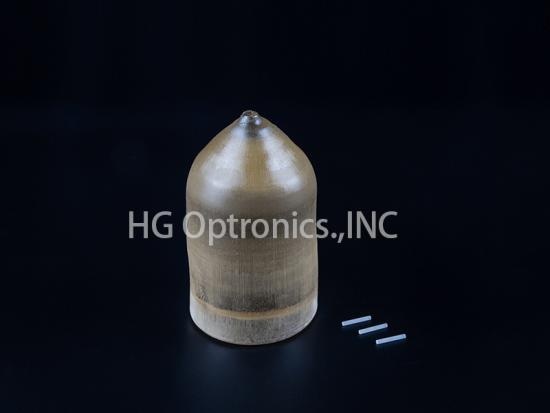
TGG is an excellent magneto-optical crystal used in various Faraday devices(Polarizer and Isolator) in the range of 400nm-1100nm, excluding 475-500nm.
Read More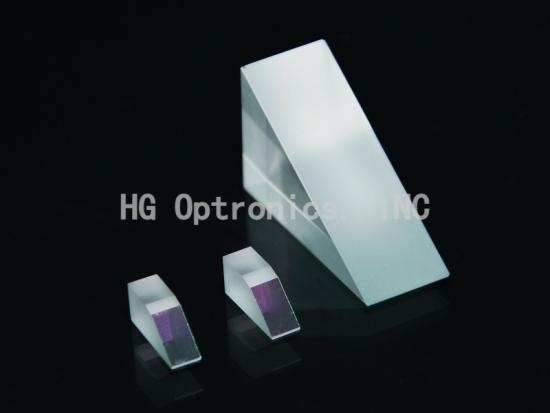
Beamsplitter Penta Prism by adding a wedge and with partial reflective coating on one of its leaning surfaces, Penta Prism can be used as Beamsplitter. Transmission/reflection (T/R) ratio of 50/50, or others for Beamsplitter Penta Prism is available upon request.
Read More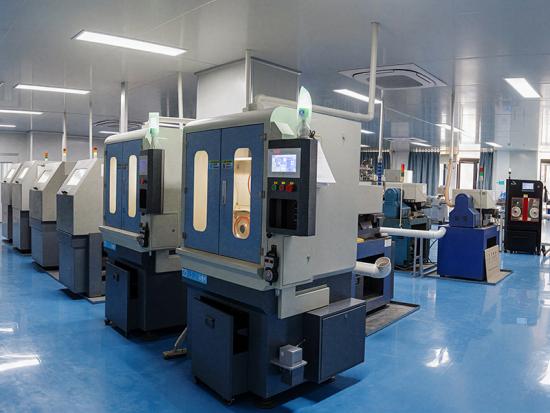
HGO is a company has skillful workers with wide processing experiences and skillful processing technique. Thus we also offer processing service such as oriented, cutting, grinding, polishing ,repolishing, coating ,recoating and diffusion bonding etc. Customers are very welcome to contact with us for further information.
Read More
 IPv6 network supported