what are you looking for?
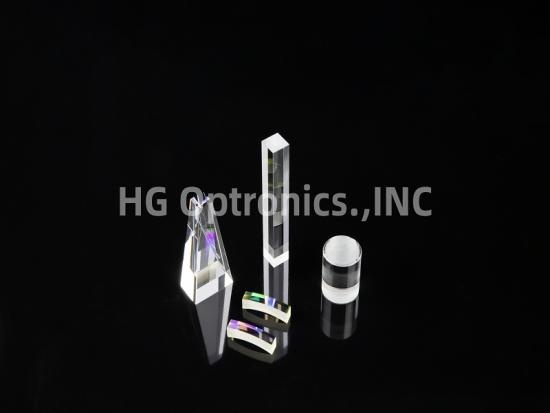
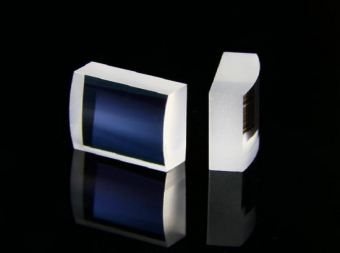
Plano-concave rectangular cylindrical lenses provide uni- axial negative imaging for anamorphic beam expansion and a wide range of applications.These lenses may also be used as mirror blanks if a concave cylindrical surface mirror is required.
Product Origin:
ChinaShipping Port:
Fuzhou, ChinaLead Time:
5-6weeks


2.1、Why is cylindrical lens used?
A cylindrical lens is typically used to focus, condense or expand incoming light. A cylindrical lens has one cylindrical surface, causing light to be focused in a single dimension or axis.
2.2. Specifications
|
Material: |
Optical glass,Fused silica |
|
Design wavelength: |
546.1nm |
|
Diameter tolerance: |
+0/-0.05mm |
|
Focal tolerance: |
+/-2% |
|
surface quality : |
40-20 S/D |
|
Centration: |
3 arcmin |
|
Surface flatness: |
N=5△N=0.5 |
|
Clear aperture: |
90% |
|
Bevel: |
Protective |
|
Coating |
Optional |
 Leave A Message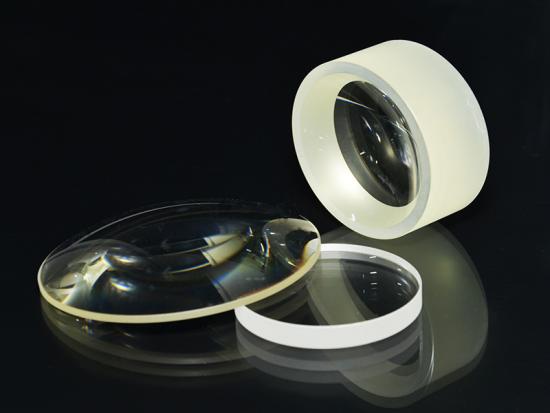
A cylindrical lens is a lens that focuses light on a line instead of a point, like a spherical lens. The curved face or faces of a cylindrical lens are sections of a cylinder, and focus the image passing through it into a line parallel to the intersection of the surface of the lens and a plane tangent to it. The lens compresses the image in the direction perpendicular to this line and leaves it unaltered in the direction parallel to it (in the tangent plane). In a light sheet microscope, a cylindrical lens is placed in front of the illumination objective to create the light sheet used for imaging. Cylindrical lenses focus or expand light in one axis only. They can be used to focus light into a thin line in optical metrology, laser scanning, spectroscopic, laser diode, acousto-optic, and optical processor applications. They can also be used to expand the output of a laser diode into a symmetrical beam. Cylindrical lenses are widely used in telecom applications like WSS, 40G/100G modules and laser applications like pump laser modules
Read More
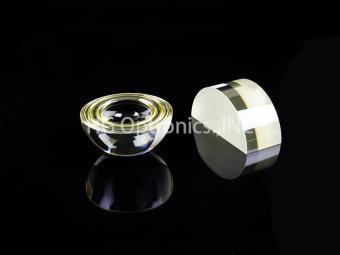
Plano-convex circular cylindrical lenses are useful for line imaging or uni-axial magnification in a wide range of applications. These lenses may be combined with other lenses to form complex imaging systems.
Read More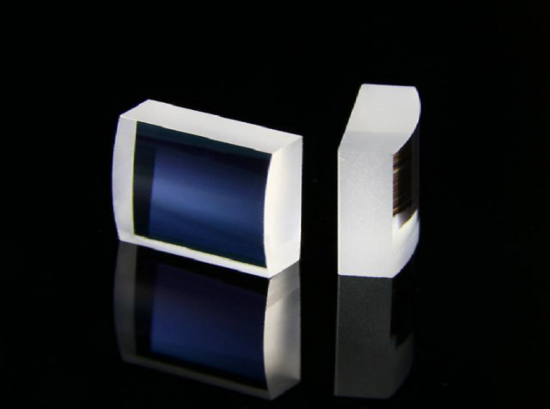
Plano-convex rectangular cylindrical lenses are useful for line imaging or uni-axial magnification in a wide range of applications. These lenses may be combined with other lenses to form complex imaging systems.
Read More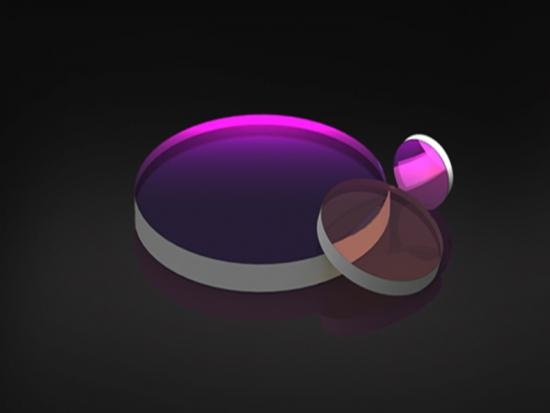
IPL Filter is the key optical element for IPL (intense Pulsed Light) machine, which blocks the UV wave and transmits the useful wave from 400nm to 1200nm for laser equipment, such as photo-rejuvenation hair removal, vascular and acne treatment, skin rejuvenation.
Read More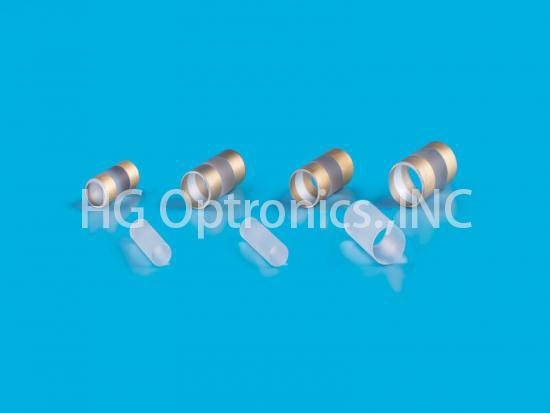
KDP Potassium Dihydrogen Phosphate and KD*P or DKDP Potassium Dideuterium Phosphate are among the most widely-used commercial NLO materials, characterized by good UV transmission, high damage threshold, and high birefringence, though their NLO coefficients are relatively low. They are usually used for doubling, tripling and quadrupling of a Nd:YAG laser under the room temperature. In addition, they are also excellent electro-optic crystals with high electro-optic coefficients, widely used as electro-optical modulators, such as Q-switches, Pockels Cells, etc.
Read More
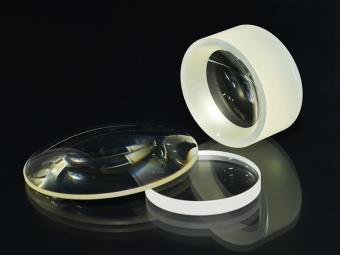
Double Convex Lenses are used in image relay applications, or for imaging objects at close conjugates. Double Convex Lenses have positive focal lengths, along with two convex surfaces with equal radii. Aberrations will increase as the conjugate ratios increase. Double-Convex Lenses are used in a range of industries or applications. HG OPTRONICS offers Double Convex lenses with a variety of coating options.
Read More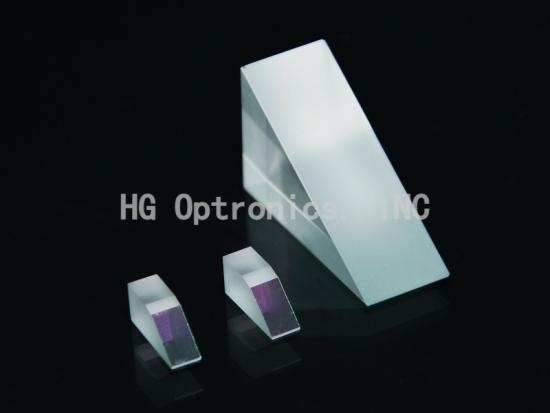
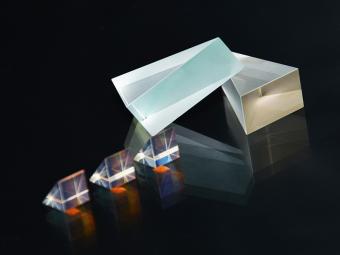
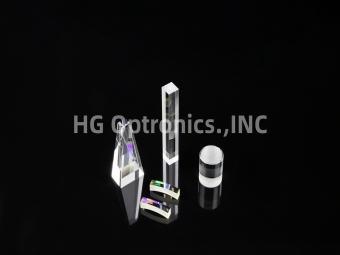
In optics, a prism is a transparent optical element with flat, polished surfaces that refract light. At least two of the flat surfaces must have an angle between them. The exact angles between the surfaces depend on the application. The traditional geometrical shape is that of a triangular prism with a triangular base and rectangular sides, and in colloquial use "prism" usually refers to this type. Some types of optical prism are not in fact in the shape of geometric prisms. Prisms can be made from any material that is transparent to the wavelengths for which they are designed.
Read More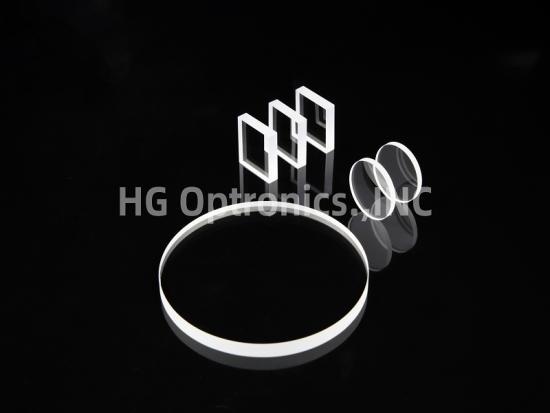
Germanium (Ge) is the preferred lens and window material for high performance infrared imaging systems in the 8–12 um wavelength band.
Read More
 IPv6 network supported