what are you looking for?
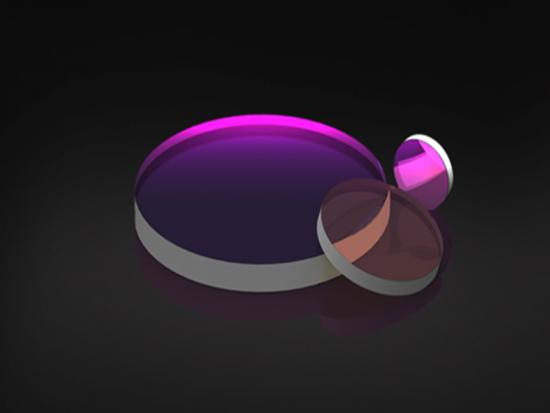
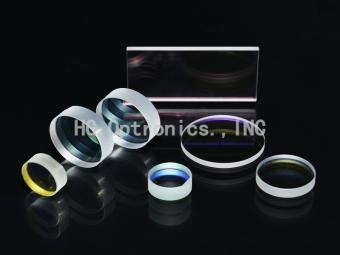
Colored glass filters are optical components that control incident wavelength by distributing an optical absorbing substance in glass.
Product Origin:
ChinaOrder(MOQ):
10Shipping Port:
Fuzhou, ChinaLead Time:
4 weeks


1.1、How do optical filters work?
Optical filters are passive devices that allow the transmission of a specific wavelength or set of wavelengths of light. Absorptive filters have a coating of different organic and inorganic materials that absorb certain wavelengths of light, thus allowing the desired wavelengths to pass through.
1.2、What is the central wavelength of a red filter?
Recall that the visible wavelength ranges are: 430 to 490 nm = blue; 490 to 530 nm = green; 530 to 580 nm = yellow; 580 to 630 nm = orange and 630 to 700 nm = red.
1.3. Common specification
|
Specification |
Standard |
High Precision |
|
Dimension Tolerance |
+0.0/-0.2 |
+0.0/-0.02 |
|
Thickness Tolerance |
±0.2 |
±0.05 |
|
Surface quality: |
60-40 |
20-10 |
|
Clear Aperture |
>85% |
>95% |
|
Flatness(per 25mm@633nm) |
λ /2 |
λ /8 |
|
Parallelism |
3 min |
10 sec |
|
Material |
color glass |
|
|
Bevel |
<0.25mm X 45° |
|
|
Coating |
Optional (Uncoated, AR Coating, etc.) |
|
 Leave A Message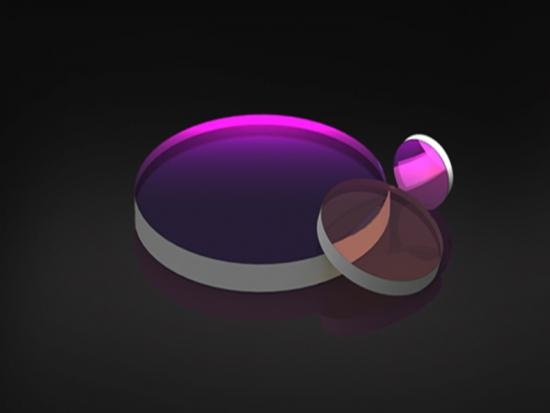
A Neutral Density filter allows a photographer to control the exposure in an image very easily. The filter stops light reaching the camera sensor, therefore allowing us to leave the camera with a higher aperture for a longer amount of time. HG OPTRONICS neutral-density filter is a filter that reduces or modifies the intensity of all wavelengths, or colors, of light equally, giving no changes in hue of color rendition.
Read More
Longpass filters are ideal for a variety of applications, such as gas monitoring, temperature, sensing, thermal imaging and motion sensing, etc. Longpass filters block shorter wavelengths and transmit longer wavelengths. Blocking can be from reflectance, absorption or a combination. Transmission in the pass band can be enhanced with an antireflection coating on the second surface.
Read More
A band pass filter is a device that passes frequencies within a certain range and rejects (attenuates) frequencies outside that range, and it’s used to selectively transmit a portion of the spectrum while rejecting all other wavelengths.
Read More
IPL Filter is the key optical element for IPL (intense Pulsed Light) machine, which blocks the UV wave and transmits the useful wave from 400nm to 1200nm for laser equipment, such as photo-rejuvenation hair removal, vascular and acne treatment, skin rejuvenation.
Read More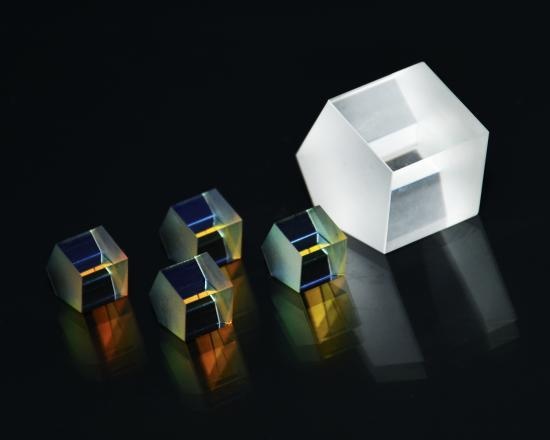
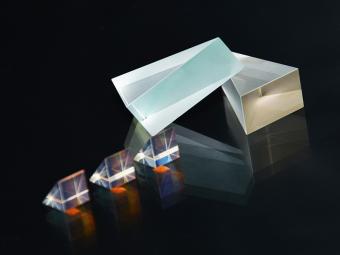
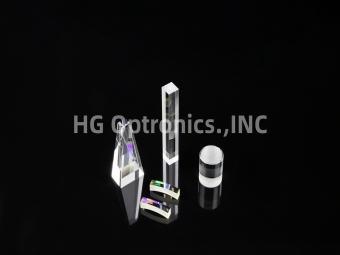
Penta Prisms are used to define right angles in optical systems. Penta Prisms, which provide right handed images,feature a ray deviation of 90°. Penta Prisms are five-sided prisms are unaffected by slight movements. HG OPTRONICS offers a variety of Penta Prisms for optimal performance in the Ultraviolet (UV), Visible, or Infrared (IR) spectrums.
Read More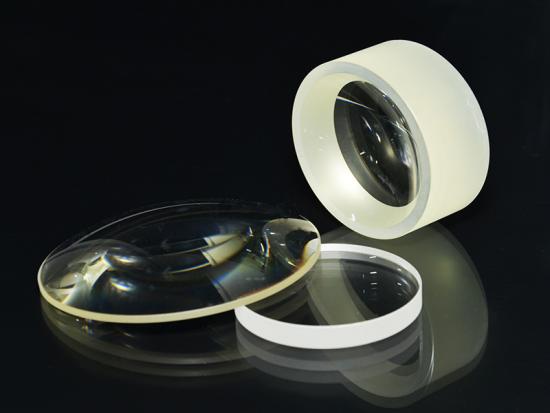
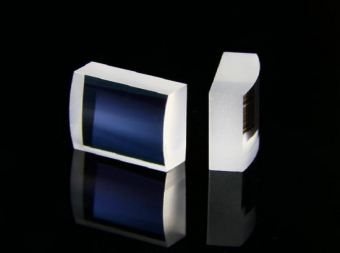
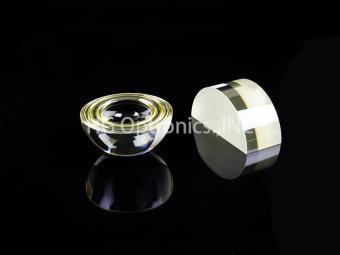
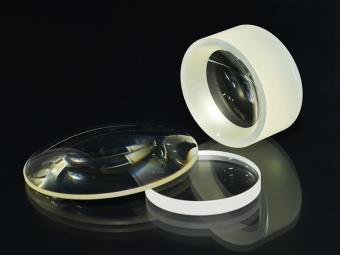
A cylindrical lens is a lens that focuses light on a line instead of a point, like a spherical lens. The curved face or faces of a cylindrical lens are sections of a cylinder, and focus the image passing through it into a line parallel to the intersection of the surface of the lens and a plane tangent to it. The lens compresses the image in the direction perpendicular to this line and leaves it unaltered in the direction parallel to it (in the tangent plane). In a light sheet microscope, a cylindrical lens is placed in front of the illumination objective to create the light sheet used for imaging. Cylindrical lenses focus or expand light in one axis only. They can be used to focus light into a thin line in optical metrology, laser scanning, spectroscopic, laser diode, acousto-optic, and optical processor applications. They can also be used to expand the output of a laser diode into a symmetrical beam. Cylindrical lenses are widely used in telecom applications like WSS, 40G/100G modules and laser applications like pump laser modules
Read More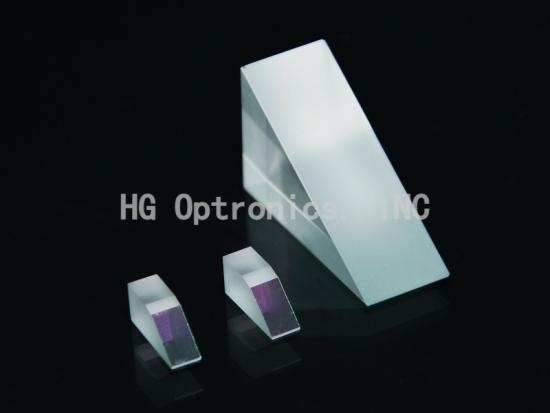
Beamsplitter Penta Prism by adding a wedge and with partial reflective coating on one of its leaning surfaces, Penta Prism can be used as Beamsplitter. Transmission/reflection (T/R) ratio of 50/50, or others for Beamsplitter Penta Prism is available upon request.
Read More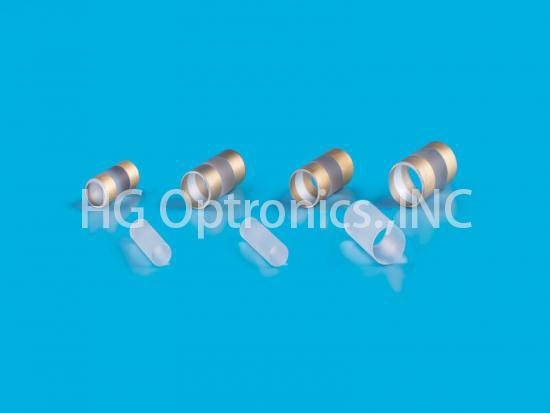
KDP Potassium Dihydrogen Phosphate and KD*P or DKDP Potassium Dideuterium Phosphate are among the most widely-used commercial NLO materials, characterized by good UV transmission, high damage threshold, and high birefringence, though their NLO coefficients are relatively low. They are usually used for doubling, tripling and quadrupling of a Nd:YAG laser under the room temperature. In addition, they are also excellent electro-optic crystals with high electro-optic coefficients, widely used as electro-optical modulators, such as Q-switches, Pockels Cells, etc.
Read More
 IPv6 network supported