what are you looking for?
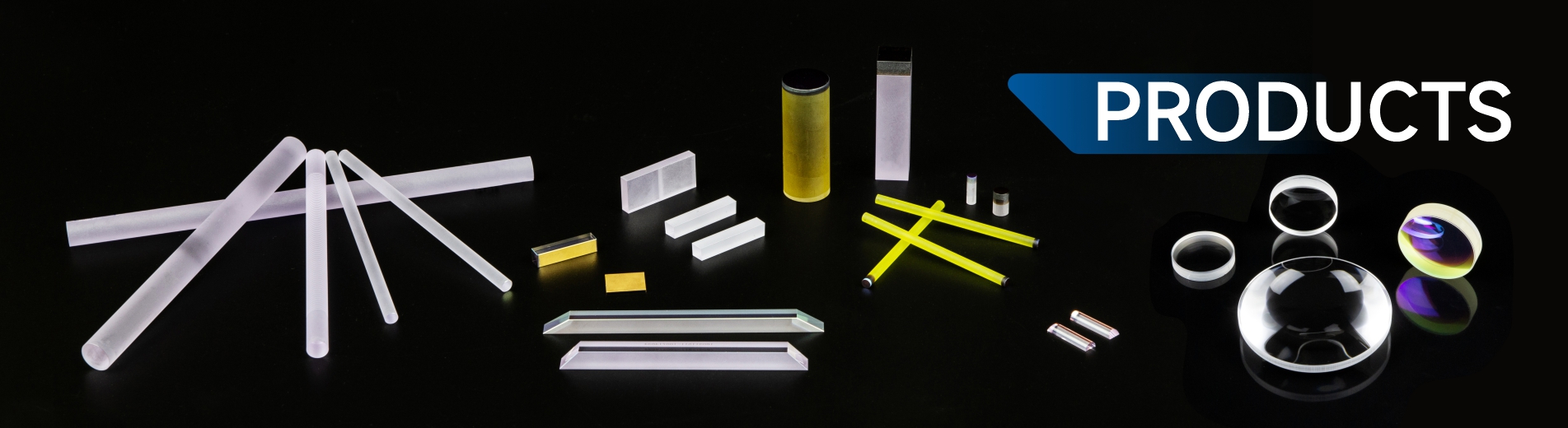
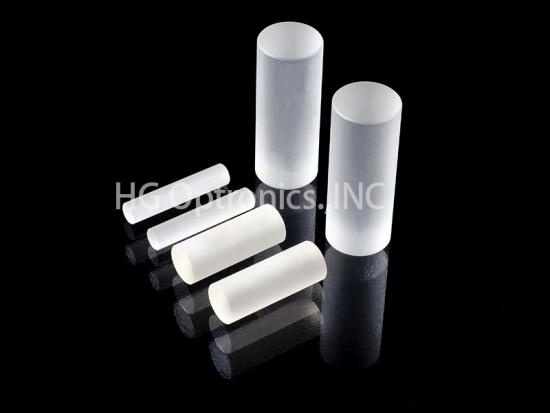
LiNbO3 is widely used as electro-optic modulators and Q-switches for Nd:YAG, Nd:YLF and Ti:Sapphire lasers as well as modulators for fiber optics.
Shipping Port:
Fuzhou, ChinaLead Time:
3-4weeks


Lithium niobate (LiNbO3, LN) is a multi-purpose material in photonics and optoelectronics fields. As a highly versatile lithium niobate crystal (often referred to as an LN crystal), it features excellent nonlinear, electro-optic, and piezoelectric properties. This high-purity LiNbO3 single crystal is widely used as electro-optic modulators and Q-switches for Nd:YAG, Nd:YLF, and Ti:Sapphire lasers, as well as modulators for fiber optics. The unique LiNbO3 crystal structure allows it to perform exceptionally well in various complex optical systems.
| NLO Coefficients | d33 = 34.4 pm/V d31 = d15 = 5.95 pm/V d22 = 3.07 pm/V |
| Effective NLO coefficients | deff = 5.7 pm/V for frequency doubling 1300 nm; deff = 5.3 pm/V for OPO pumped at 1064 nm; deff = 17.6 pm/V for quasi-phase-matched structure. |
| Electro-Optic Coefficients | γT33 = 32 pm/V, γs33 = 31 pm/V, γT31 = 10 pm/V, γs31 = 8.6 pm/V, γT22 = 6.8 pm/V, γs22 = 3.4 pm/V |
| Photorefractive Damage Threshold | 50 MW/cm2 (10 ns, 1064 nm) |
| Surface Damage Threshold | 300 MW/cm2 (10 ns, 1064 nm) |
| Chemical Formula | LiNbO3 (Lithium niobate LiNbO3) |
| Lattice Constant, Å | a = b = 5.148 Å, c = 13.863 Å |
| Melting Point | 1250°C |
| Density | 4.64 g/cm3 |
| Curie Temperature | ~ 1140°C |
| Mohs Hardness | 5 |
| Thermal Expansion | a11 = 15.4×10⁻⁶/K, a33 = 7.5×10⁻⁶/K |
| Thermal Conductivity, W/(m K) at 300 K | 5.6 |
| Refractive Indices | n0 = 2.286, ne = 2.203 @632.8nm |
| Nonlinear Optical Coefficients, pm/V at 1064 nm | d31 = -4.5, d33 = -0.27, d22 = 2.1 |
| Electro-Optical Coefficients, pm/V at 633nm | γT33 = 31, γs31 = 9, γs22 = 3.4 |
| Transmittance Range | 420 ~ 5200 nm (>68% @632.8nm) |
| The Sellmeier equations (λ: μm) | n02(λ) = 4.9048 + 0.11768/(λ2 - 0.04750) - 0.027169 × λ2 ne2(λ) = 4.5820 + 0.099169/(λ2 - 0.04443) - 0.021950 × λ2 |
| Tolerance of cutting angle | Δθ ≤ ±0.25°, Δφ ≤ ±0.25° |
| Tolerance of dimension | Dimension +0/-0.1 mm, L: ±0.1mm |
| Flatness | λ/10 @ 632.8nm |
| Wavefront distortion | λ/8 @ 632.8nm |
| Surface quality | 10/5 per MIL-O-13830A |
| Parallelism | 20″ |
| Perpendicularity | 5′ |
| Clear Aperture | > 90% |
| Chamfer | < 0.1 mm @ 45° |
| Size | Upon customer request (Custom LiNbO3 crystal sizes available) |
| Coating | AR/HR coating upon customer’s request |
| Electrodes | Gold/Chrome plated on X-faces |
| Damage Threshold | 750MW/cm2 at 1064nm, TEM00, 10ns, 10Hz |
| Quality Warranty Period | One year under proper use |
1. What is the difference between LiNbO3 and an LBO crystal?
While both are nonlinear optical materials, an LBO crystal (Lithium Triborate) is primarily used for high-power UV and visible light generation (like SHG/THG) due to its high damage threshold. A LiNbO3 crystal excels in electro-optic modulation, Q-switching, and optical parametric oscillators (OPO) because of its broad transparency and strong electro-optic coefficients.
2. How does the LiNbO3 crystal structure affect its performance?
The LiNbO3 crystal structure belongs to the trigonal crystal system. This unique asymmetric structure is the fundamental reason behind its strong piezoelectric, electro-optic, and nonlinear optical properties, making it indispensable for modern photonics.
3. What determines the lithium niobate price?
The lithium niobate price varies based on the dimensions, specific cut angles, doping requirements (e.g., 5% MgO doped), and custom coatings (AR/HR) or electrodes required for your specific application. Contact us for a precise quote.
HGO offers both pure Lithium niobate (LiNbO3, LN) and 5% MgO doped Lithium niobate crystals for Q-switches with transverse E-O modulation, second harmonic generation (SHG), sum frequency generation (SFG), different frequency generation (DFG), or optical parametric generation (OPA). High quality LiNbO3 single crystals with λ/10 wavefront distortion can be reliably supplied by HGO.
 Leave A Message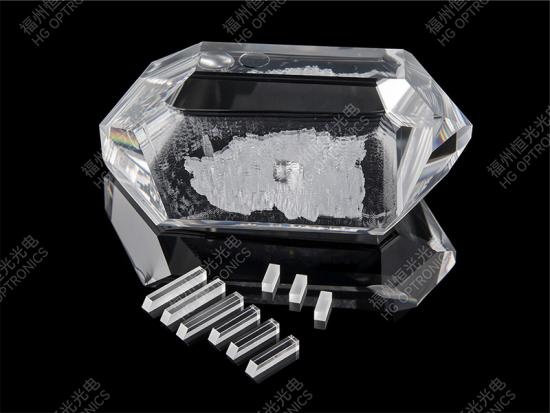
HGO grows LBO Nonlinear crystals using flux technology. LBO crystals is an excellent nonlinear crystal.For frequency doubling(SHG),tripling(THG) of Nd:YAG,Nd:YLF,Nd:YVO4 lasers, it is one of the most useful nonlinear optical materials in ultraviolet and visible laser applications.
Read More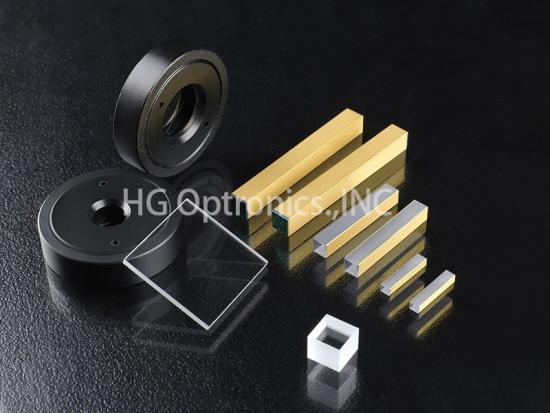
HGO grows BBO Nonlinear crystals using flux technology. BBO crystal transparency ranges from 188 nm to 5,2 µm, which includes reasonable transparency from 3-5,2 µm for few tens µm thick crystals, while their phase-matchable range spans almost over the entire transparency range. Combined with other magnificent properties of BBO, it is favorable for numerous nonlinear parametric applications. It is worth to mention that BBO crystals have the highest nonlinearity in the UV range out of all common nonlinear crystals.
Read More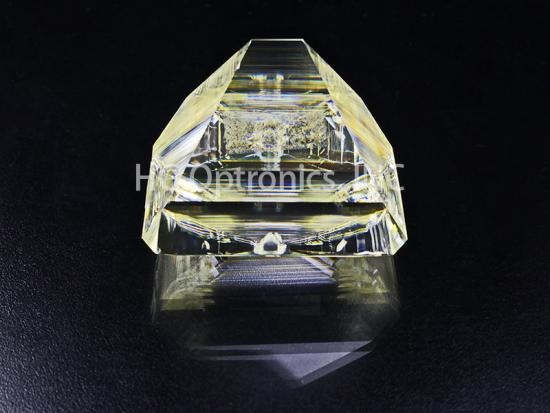
Potassium Titanyl Phosphate (KTiOPO4 or KTP) is widely used in both commercial and military lasers including laboratory and medical systems, range-finders, lidar, optical communication and industrial systems.
Read More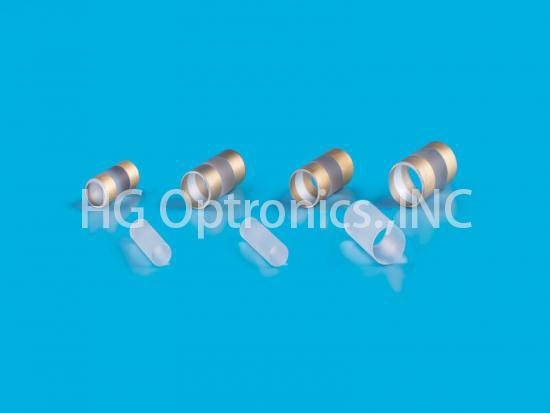
KDP Potassium Dihydrogen Phosphate and KD*P or DKDP Potassium Dideuterium Phosphate are among the most widely-used commercial NLO materials, characterized by good UV transmission, high damage threshold, and high birefringence, though their NLO coefficients are relatively low. They are usually used for doubling, tripling and quadrupling of a Nd:YAG laser under the room temperature. In addition, they are also excellent electro-optic crystals with high electro-optic coefficients, widely used as electro-optical modulators, such as Q-switches, Pockels Cells, etc.
Read More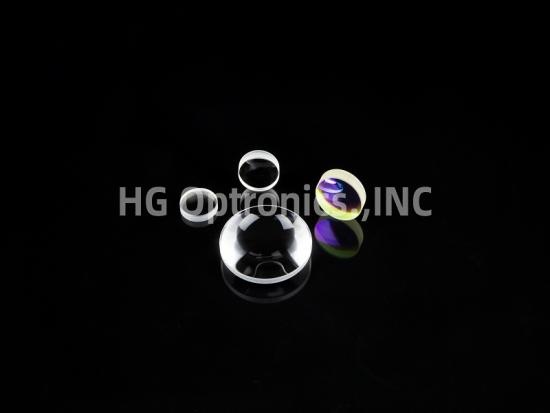
Double Concave Lenses are used in beam expansion, image reduction, or light projection applications. These lenses are also ideal for expanding the focal length of an optical system. Double Concave Lenses, which have two concave surfaces, are Optical Lenses with negative focal lengths. HG OPTRONICS offers Double Concave lenses with a variety of coating options.
Read More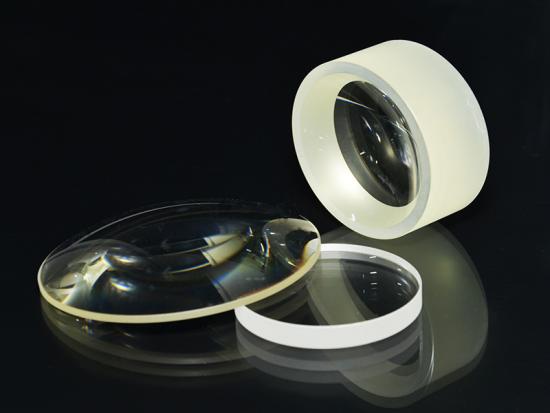
Laser Lenses are used to focus collimated light from laser beams in a variety of laser applications. Laser Lenses include a range of lens types including HGQ Lenses, Cylinder Lenses, or Laser Generator Lenses. Laser Lenseare designed to focus light in several different ways depending on the lens type, such as focusing down to a point,a line, or a ring. Many different lens types are available in a range of wavelengths.
Read More
KDP Potassium Dihydrogen Phosphate and KD*P or DKDP Potassium Dideuterium Phosphate are among the most widely-used commercial NLO materials, characterized by good UV transmission, high damage threshold, and high birefringence, though their NLO coefficients are relatively low. They are usually used for doubling, tripling and quadrupling of a Nd:YAG laser under the room temperature. In addition, they are also excellent electro-optic crystals with high electro-optic coefficients, widely used as electro-optical modulators, such as Q-switches, Pockels Cells, etc.
Read More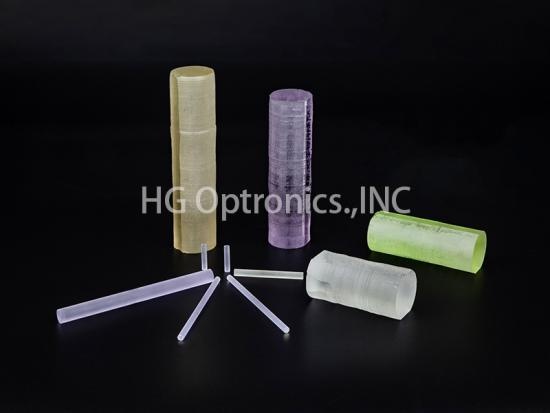
HGO grows Ho:YLF laser crystals using Czochralski technology. Ho:YLF is a very attractive laser material, because the lifetime of the upper laser level is much longer ( ~ 14 ms) than in Ho:YAG and the emission cross sections are higher. Additionally the thermal lens in Ho:YLF is much weaker, which helps to generate diffraction limited beams even under intense end-pumping. The primary advantage of directly pumping the Ho 5I7 is that it does not have to depend on energy transfer, which lends itself to various radiative and non-radiative losses. Up-conversion losses that have deleterious effect in high-energy Q-switched lasers are eliminated.
Read More
 IPv6 network supported