what are you looking for?
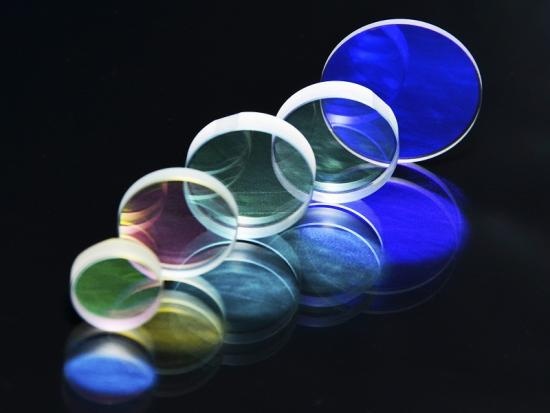
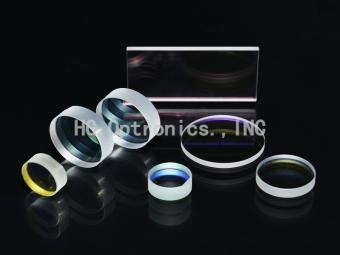
The dichroic mirror is a mirror with significantly different reflection or transmission properties at two different wavelengths, it’s characterized by almost complete transmission of light at certain wavelengths and almost complete reflection of light at other wavelengths. It can be widely used in Laser technology applications.
Product Origin:
ChinaShipping Port:
Fuzhou, ChinaLead Time:
4 weeks


2.1、What is Dichroic Mirrors?
The dichroic mirror is a mirror with significantly different reflection or transmission properties at two different wavelengths, it’s characterized by almost complete transmission of light at certain wavelengths and almost complete reflection of light at other wavelengths. It can be widely used in Laser technology applications.
2.2、What are the features of Dichroic Mirror offered by HG OPTRONICS?
HG OPTRONICS customizes the Dichroic Mirror with the following features:
1):High reflectivity
2):High damage threshold
3):Long life-time
2.3、What HG OPTRONICS can do for you?
|
Substrate Materials: |
N-BK7, Fused silica, Pyrex |
|
Dimensional tolerance: |
+/-0.1mm |
|
Surface quality: |
20-10 |
|
Parallelism: |
1’ |
|
Flatness: |
λ/8 per 25mm@633nm |
|
Bevel: |
Protective |
|
One surface: |
Laser grade Polished and HR coating |
|
The other surface: |
Fine ground |
|
Angle of incident: |
0°or 45° |
 Leave A Message
Laser Line Mirrors are used for beam-steering in demanding laser applications. Laser Line Mirrors are Optical Mirrors that have been designed for specific laser types or wavelengths.
Read More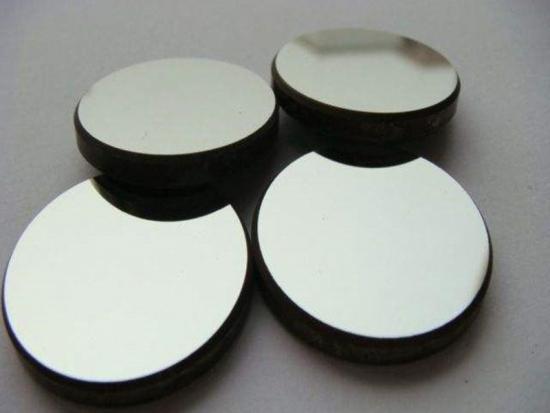
HG Optronics.,INC. can provide Metal Coated Mirror,Dielectric Coated Mirror and Dichroic Mirror which are made of substrate such as BK7, Optical glass, Fused Silica, CaF2 and so on.
Read More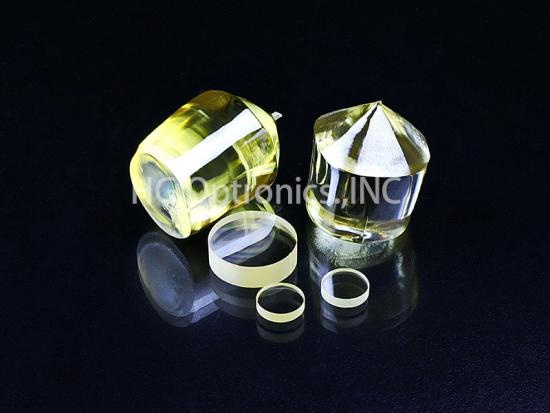
The Yttrium Orthovanadate (YVO4) is a positive uniaxial crystal grown with Czochralski method. It has good temperature stability and physical and mechanical properties. It is ideal for optical polarizing components because of its wide transparency range and large birefringence. It is an excellent synthetic substitute for Calcite (CaCO3) and Rutile (TiO2) crystals in many applications including fiber optic isolators and circulators, interleavers, beam displacers and other polarizing optics.
Read More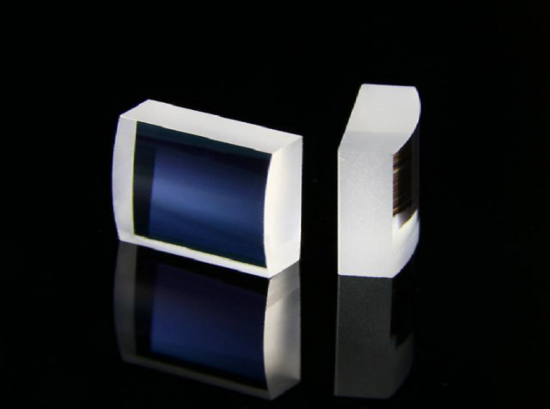
Plano-convex rectangular cylindrical lenses are useful for line imaging or uni-axial magnification in a wide range of applications. These lenses may be combined with other lenses to form complex imaging systems.
Read More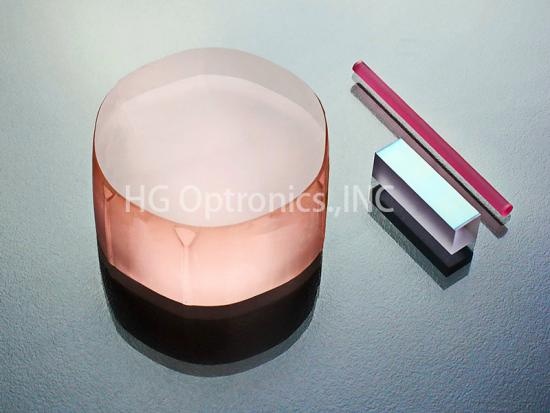
YbYAG crystal is more suitable for diode-pumping than the traditional Nd-doped systems. It can be pumped at 0.94 μm laser output. Compared with the commonly used Nd:YAG crystal, Yb:YAG crystal has a much larger absorption bandwidth to reduce thermal management requirements for diode lasers, a longer upper-state lifetime, three to four times lower thermal loading per unit pump power. Yb:YAG crystal is expected to replace Nd:YAG crystal for high power diode-pumped lasers and other potential applications.
Read More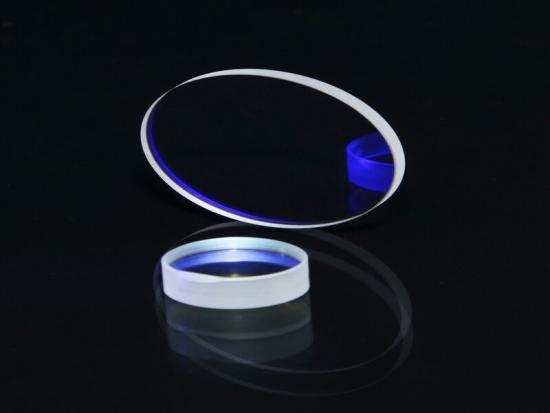
MgF2 or Magnesium Fluoride is positive uni-axial crystal with a very high optical transmittance from the vacuum UV to IR. It is regularly used for optical elements where extreme ruggedness and durability is required. It also has a large resistance to mechanical and thermal shock, to optical radiation, and is chemically stable, making it a very useful materials for UV and IR optics.
Read More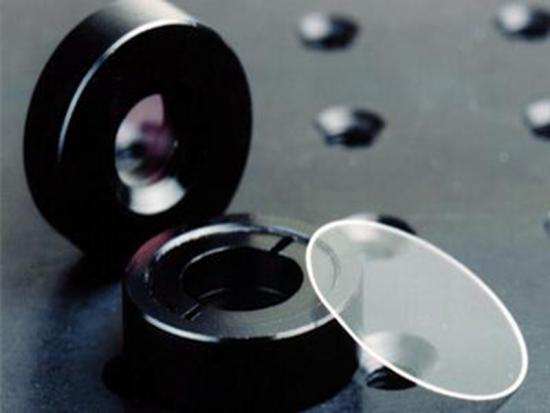
Waveplates (retardation plates or phase shifters) are made from materials which exhibit birefringence. The velocities of the extraordinary and ordinary rays through the birefringent material varies inversely with their refractive indices. This difference in velocities gives rise to a phase difference when the two beams recombine.
Read More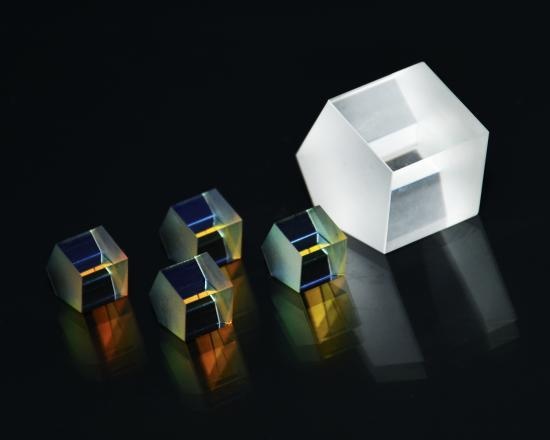
Penta Prisms are used to define right angles in optical systems. Penta Prisms, which provide right handed images,feature a ray deviation of 90°. Penta Prisms are five-sided prisms are unaffected by slight movements. HG OPTRONICS offers a variety of Penta Prisms for optimal performance in the Ultraviolet (UV), Visible, or Infrared (IR) spectrums.
Read More
 IPv6 network supported